
From Pedals to STACYC: Watching a Crazy Idea Change the Game

It’s pretty wild how life comes full circle. I’m 46 years old now, and I’ve got my three-year-old ripping around on a 12-inch STACYC. Every time I watch him ride it, I think back to a day at our pump track in Temecula when my old boss from KTM, Ryan Ragland, showed up with something none of us had really seen before. It was this little electric balance bike he had built for his first son, Robby. And I’ll be the first to admit — I wasn’t sold on the idea.


At that point in my life, I had a pretty firm opinion about how kids should learn to ride. Learning to pedal a bicycle was a rite of passage. You learned to balance, figured out how to pedal, crashed, got back up, and eventually earned your way onto a motorcycle. That was how I grew up, and that was how I thought my kids should do it. Ryan had been my boss at KTM and was one of the smartest engineers I’d worked with. He was always thinking differently and, more importantly, he could actually build the things he dreamed up. So when he brought this little electric balance bike out to our pump track in Temecula, I was interested, but I was definitely skeptical.
Then Mason got on it, and I started to understand what Ryan was onto. The bike hadn’t been built for Mason; Ryan had built it for Robby. But watching Mason ride that prototype around our pump track was the first time I really started to see the idea differently. He didn’t have to think about pedaling. He could concentrate on balance, braking, cornering, body position and controlling his speed. Most importantly, he was having an absolute blast. It wasn’t really a bicycle, and it wasn’t really a motorcycle. It was something in between. At the time, I don’t think any of us fully appreciated just how big that space in between could become.
Around that same time, my longtime friend Mike Dettmers was working on the sales side of the Bicycle industry. I knew Ryan, I knew Mike, and I could see that their skill sets made sense together. Ryan was an incredible engineer with this crazy little product he had created for his son, and Mike understood sales and the Bicycle business. So I connected them. And then — BOOM. Those guys changed the game. What started as something Ryan built for his son began turning into STACYC and ultimately into an entirely new category within the motorcycle industry. You can read more about how it all started on The STACYC Story.
Not long after that first experience, I ended up getting VIN numbers three and four for Mason and the boys. That’s how early this was. The boys were ripping around on them constantly, and because these were some of the very first bikes, we were all learning in real time what a STACYC could and couldn’t do. We definitely found the limits.
I remember one day the boys were ripping around on the grass when the lights started flashing, the bikes shut off, and they’d popped a fuse. I was pissed. I couldn’t believe these things had stopped working. Ryan and Mike basically told me, “Don’t ride them in the grass.” Well, that didn’t exactly make me any happier. I remember carrying on about it in the cul-de-sac outside Ryan’s house in Temecula, right in front of Mike and Ryan — two guys who were completely invested in this project and putting everything they had into making it work.

Looking back now, I think, Man, I handled that poorly. If I could go back and handle that moment differently, I absolutely would. But with the benefit of hindsight, I also understand why I was so frustrated. The kids were having so much damn fun on those bikes that they couldn’t stand it when they stopped working. And as their dad, neither could I. That was really what those early days were about. We were all learning. The bikes were learning what they needed to become, and I was learning what this whole idea was really about.

Those early bikes got absolutely hammered. Mason and Noah weren’t exactly gentle product testers, and I built more STACYCs than I can remember. We broke plenty of them. Parts broke, things were changed, bikes were rebuilt, and the product just kept evolving. That’s the part people sometimes don’t see when something becomes successful. Before there are thousands of kids riding them, there are prototypes, broken parts, ideas that don’t work, frustrated dads in cul-de-sacs, and a handful of people who believe enough in an idea to keep improving it. Ride it. Break it. Figure out why. Make it better. Go ride it again. That’s product development.


One of my favorite memories from those early years was Mason and Noah getting the opportunity to compete in the first STACYC exhibition race — and Mason won. At the time, it was just another awesome experience for the boys. Looking back now, it means a lot more. We were watching the beginning of something that would eventually become a legitimate pathway into motorcycles for thousands of kids. Go to a STACYC event today and look at the starting gates. Look at how serious some of these little kids are, but more importantly, look at how excited they are about riding. That seed was being planted all the way back in those early days.


Eventually, STACYC grew to the point where Harley-Davidson acquired the company in 2019. That was pretty incredible to watch. Something Ryan originally created because he wanted to share two-wheel riding with his own family had grown into a company that one of the most recognizable motorcycle brands in the world wanted to own. I was fortunate enough to stay involved for a period and manage the Grom Squad, working with some amazing people and families from moto and action sports — the Maddos, Pat Casey and his family, Christian Craig and his family, and a bunch of other A-list moto families. What I loved was watching their kids experience exactly what I’d watched Mason and Noah experience years earlier. It didn’t matter how accomplished Mom or Dad was. Once their little kid got on one of these things, they were simply parents watching their child discover the same love of two wheels that we all had.

Looking back, though, the biggest thing I learned from that first day at the pump track was actually pretty simple. When you take a three- or four-year-old around an adult-sized pump track on a pedal bike, they’ve only got so much energy. They might make a few laps before their little legs are cooked. Put that same kid on a STACYC and suddenly they can do lap after lap after lap. And that’s where the real magic is: repetition.
As a new dad, I was probably a little naive. Like a lot of young dads, I thought I knew it all. I had grown up racing motorcycles, spent my life around the sport, and worked as a professional rider and test rider. So in my mind, I knew how kids were supposed to learn: you learn to pedal first. It’s a rite of passage. What Ryan showed me that day was that there could be another way.


STACYC gave little kids something incredibly valuable: volume of riding. Instead of spending most of their energy just getting themselves around the track, they could spend that energy actually learning. They could do 20 laps instead of five. They could hit the same corner over and over. They could learn braking, balance, throttle control, body position and line choice without even realizing they were practicing. Because the more times you do something, inherently, the better you get at it.
That, to me, became one of the biggest things STACYC brought to youth riding. It didn’t take away the rite of passage. It gave kids more opportunities to ride through it. Even today, the STACYC 12eDRIVE follows that same basic idea of giving little kids a progressive introduction to two wheels.
And now here I am. 46 years old. Mason and Noah aren’t those little kids anymore, but I’ve got another little guy who’s three years old. And what’s he riding? A 12-inch STACYC.

Every time I watch him, I think about that afternoon at our pump track in Temecula. Ryan showing up with this strange little electric bike he’d built for Robby. Me standing there thinking kids needed to learn how to pedal first. Mason getting on the prototype. Getting VIN numbers three and four. The boys hammering those early bikes. Blowing fuses in the grass. Me losing my shit because the bikes stopped working. Ryan and Mike continuing to develop the product. Introducing those two guys and watching them take an idea and build something special. Mason and Noah winning that first exhibition. Working with the Grom Squad. Watching Harley-Davidson acquire the company. And now, all these years later, watching another one of my sons start his own journey on one.

I still believe learning to pedal a bicycle is important. But at 46, I can also look back at that younger version of myself and admit that maybe I didn’t know everything I thought I knew. Ryan saw something I didn’t see yet.
More laps. More repetition. More learning. More fun.
That little bike he built for his son ended up giving an entire generation of kids more opportunities to fall in love with two wheels.
And now it’s doing the same thing for another one of mine.
Pretty damn cool.

2026 — Lil Rags, Loretta Lynn’s and #39
Then you get to 2026, and the story somehow gets even better.
Robbie “Lil Rags” Ragland — #199 — wins a moto at Loretta Lynn’s.
For me, it’s another incredible chapter in the STACYC story.
This was a bike originally developed so Robbie could ride safely, have fun and ride alongside his friends. Years later, that same kid is lining up at the biggest amateur motocross race in America and winning a moto.
But there’s an even deeper meaning behind it.
Robbie raced Loretta’s carrying #39 in honour of his best friend, Aiden Zing, who had passed away just over a year earlier. To see him line up carrying his friend’s number and then go out and win a moto on that stage is something pretty special.
And that’s what I think sometimes gets lost when people look at what STACYC has become.
This was never just a little electric bike company.
It was something created around a family and a need. The entire Ragland family has been part of it — William, Robbie, Della and everyone around them. What started as a way for kids to safely experience two wheels became something that completely changed the entry point into riding.
Kids could start younger. They could ride in the backyard. They could ride with their parents and their friends. They could learn balance, throttle control and confidence before they were big enough for a traditional motorcycle.
And now some of those kids are growing up.
They’re racing. They’re winning. They’re creating their own stories.
To see Lil Rags win a moto at Loretta Lynn’s while carrying #39 for his best friend feels like one of those moments where the whole story comes full circle.
STACYC was built for a family, but in the process, the Ragland family helped change the landscape of how an entire generation learns to ride.


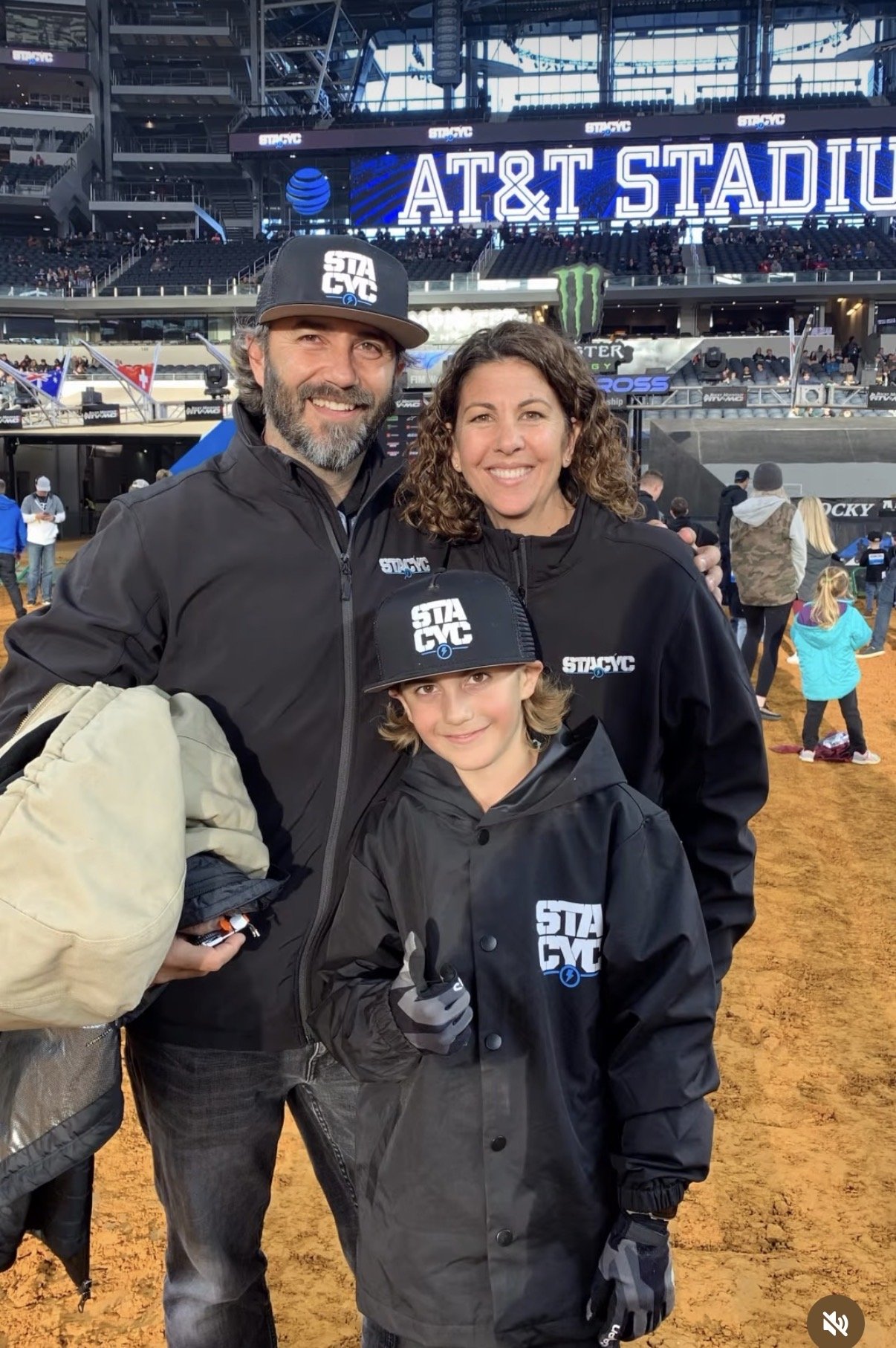
More Than a Brand — Family
I also want to give a massive thank you to the entire STACYC team, because my relationship with this brand goes much deeper than just my kids riding the bikes.
When I left KTM in 2019, Ryan Ragland, Mike Detmers, Sam, Wilson and Brock Hardin became like family to me.
It was a period of transition in my life, and this core group of people gave me an opportunity. They trusted me with the brand, gave me something to sink my teeth into and let me help run the Grom Squad and work with the kids and ambassadors.
I still remember Brock Hardin teaching me how to work on and fix the bikes so I could keep all the kids and ambassadors going. It wasn't just a job. We were all invested in what STACYC was becoming, and there was a genuine family atmosphere around the whole thing.
That's why STACYC has always meant so much more to me than just another motorcycle-industry brand.
My family has grown up alongside it.
My older boys were there during those incredibly early days, riding VIN #3 and #4, and now all these years later my youngest is riding a STACYC and creating his own two-wheel memories.
I've watched the Ragland family build it. I've watched kids learn to ride on it. I've worked alongside the people behind it. And I've watched those same little bikes completely change the way kids are introduced to two wheels.
Now I'm living in Australia, on the other side of the world, and STACYC is still part of our family's two-wheel journey.
For anyone here in Australia looking to get their kids started, I personally recommend MXstore or you can go direct at STACYC.com.au They're local to me, and they're where I buy parts and products for our family's bikes and our ongoing My Two Wheel Life adventures.
In the U.S., you can find STACYC through their official website and authorised dealer network.
But wherever you buy one, the important part is what happens next.
You put a kid on two wheels.
They figure out balance. Then the throttle. Then they start exploring a little farther from Mum and Dad. Before long, they're riding with their friends, building confidence and creating memories that they'll probably carry for the rest of their lives.
I've been fortunate enough to watch that happen with three generations of riding experiences within my own family, from those earliest STACYC bikes to where we are today.
So to the Ragland family, Ryan, Brandy, Della, Robby, William and of course the OG’s Mike Dettmers, Sam Wilson, Brock Harden and everyone who has been part of STACYC over the years — thank you.
You didn't just build a bike.
You built something that became part of our family.